Exploring Addition
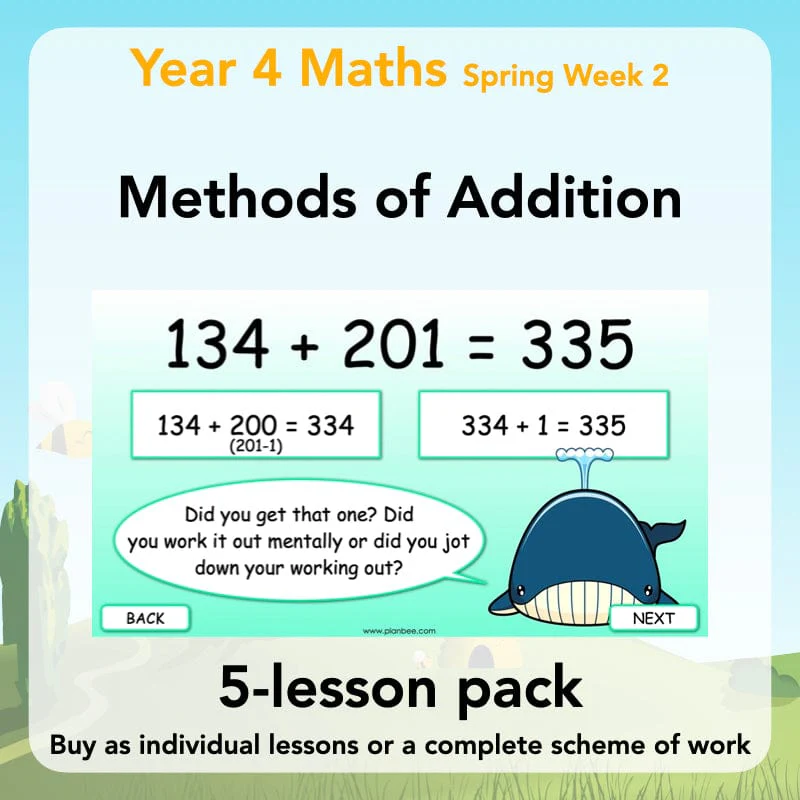
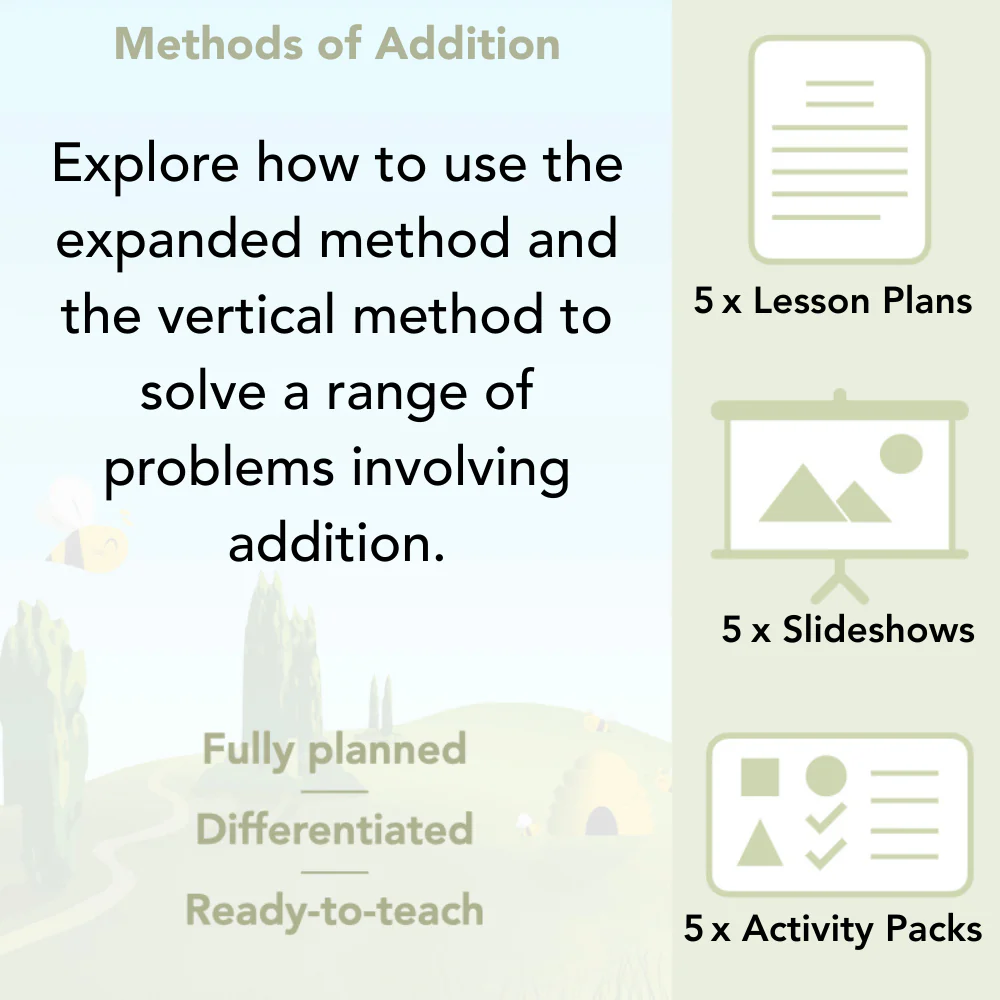
Get your children to hone their addition skills by using partitioning, estimating and formal written methods to solve a range of addition calculations, word problems and puzzles! Exploring Addition explains in simple terms how to estimate (and why it is useful) as well as how to use formal methods and present their work clearly and logically.
With lesson plans, slides, fun activity ideas, differentiated worksheets and much more, this Year 4 'Exploring Addition' series of lessons provides all you need to turn your class into addition wizards!
Partitioning
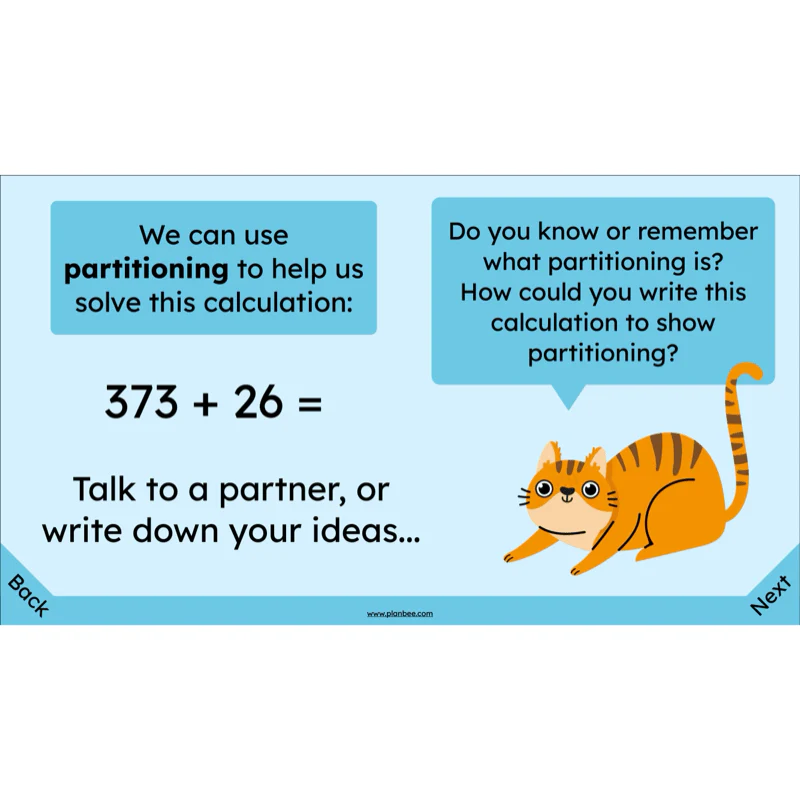
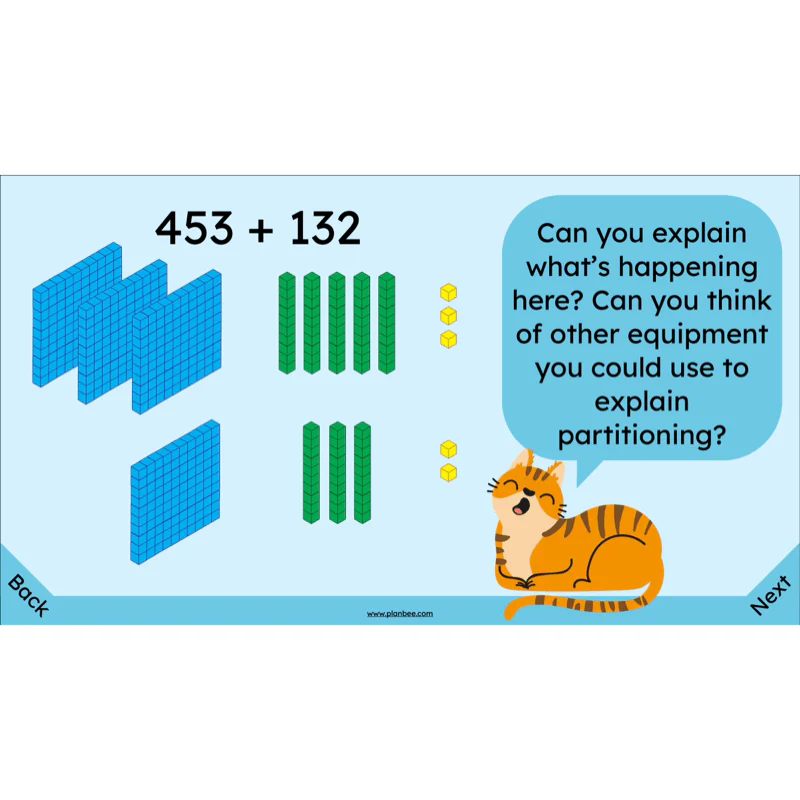
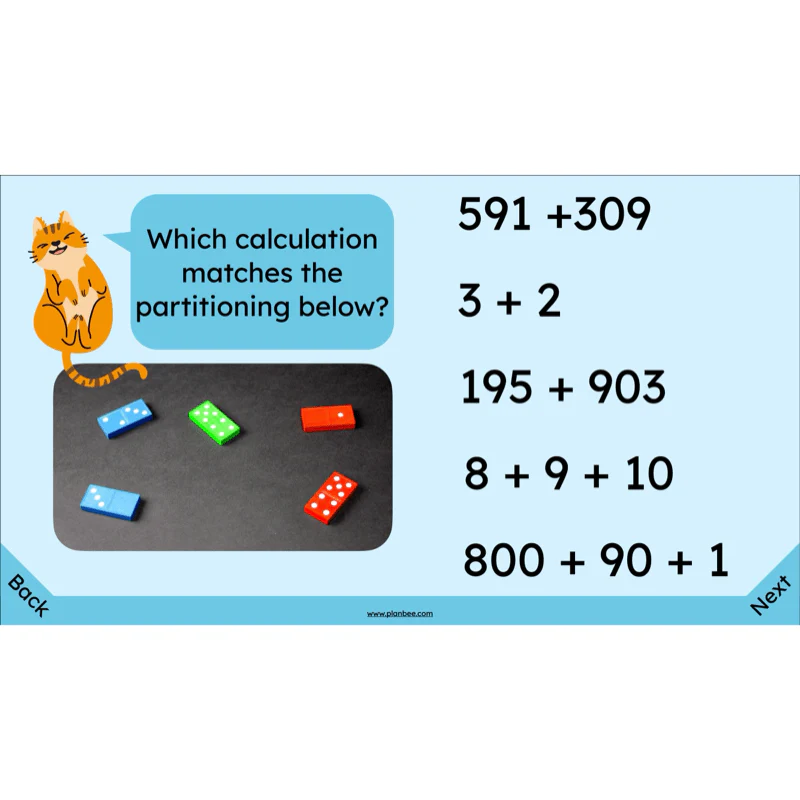
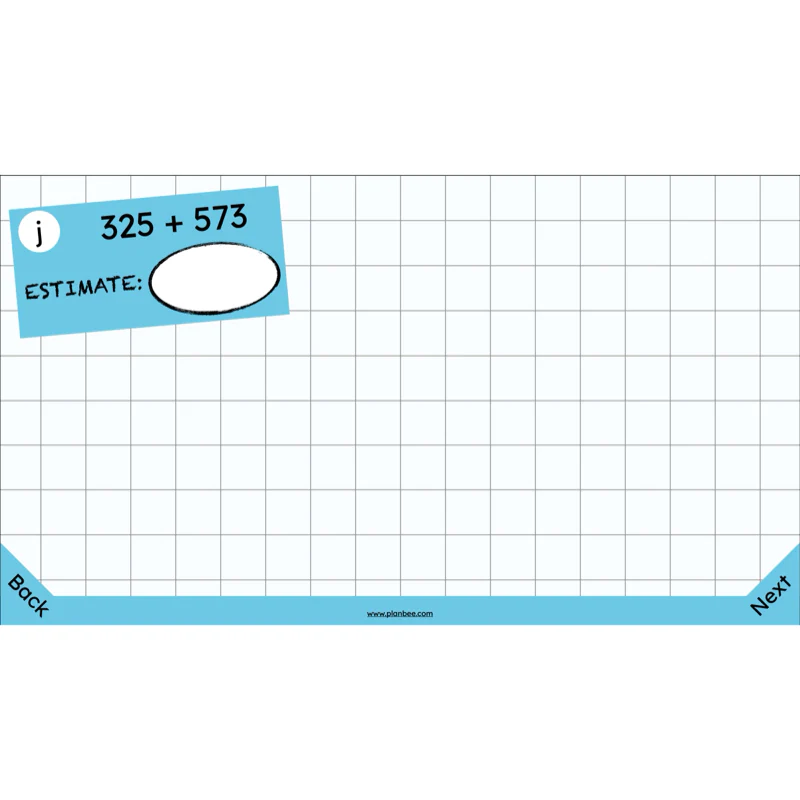
This lesson focuses on using estimating to help when checking answers to calculations, and builds on children's prior knowledge of using partitioning to add together two or more two- and three-digit numbers.
The included slides clearly show how children can present their work clearly and neatly, and there are plenty of opportunities for children to practise estimating and partitioning before they attempt either of the two included activities.
What's included:
- Lesson plan
- Slides
- Activity ideas
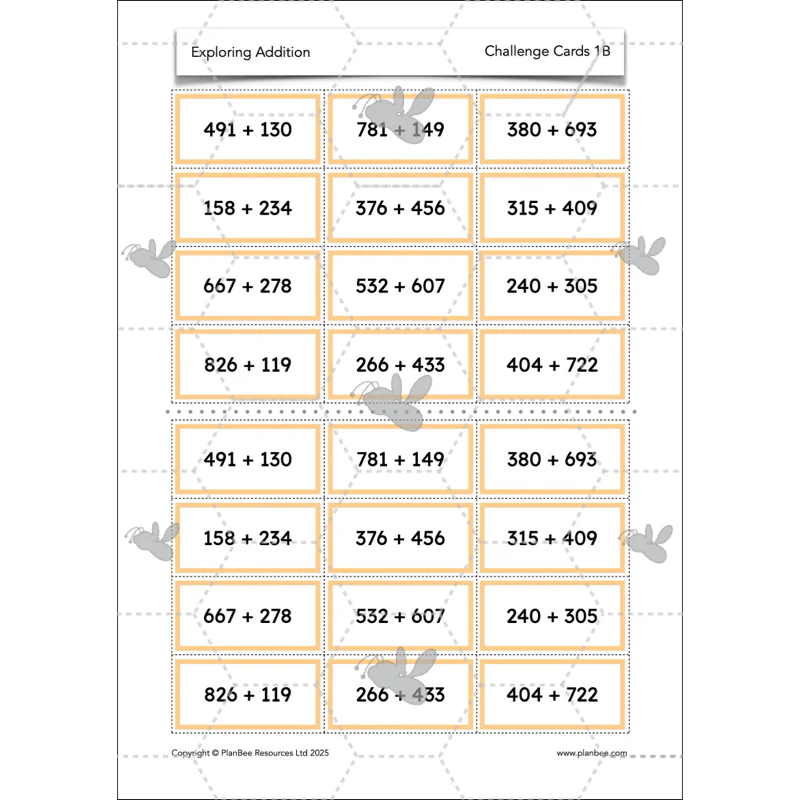
- Challenge cards
- Tiddlywinks Sheets
- Squared paper
Partition Big Numbers
Build on both children's prior knowledge and on the previous lesson's learning by using partition to add increasingly large numbers.
With the included slides, or during either of the two activities this lesson provides many opportunities to check for understanding and address misconceptions as children use a range of resources to represent the partitioning they are doing.
What's included:
- Lesson plan
- Slides
- Activity ideas
- Monster money
- Challenge cards
- Squared paper
Formal Addition
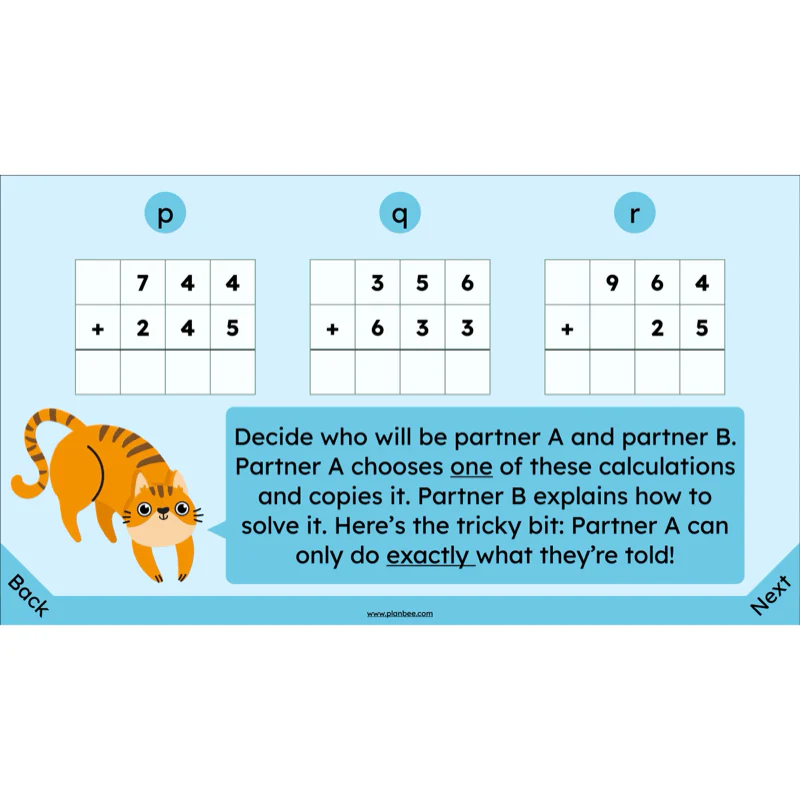
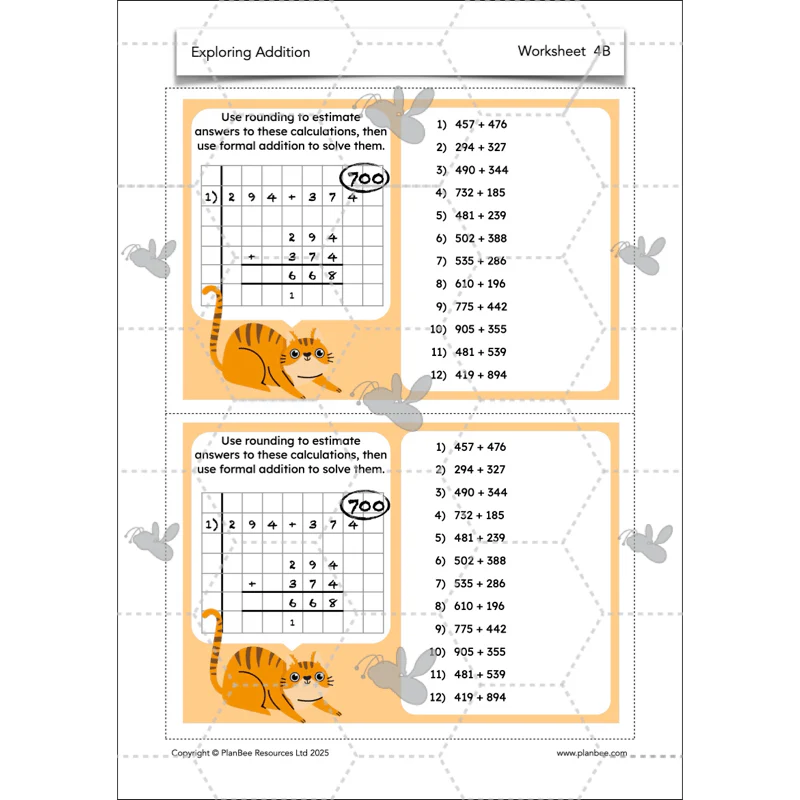
Start by challenging children to compare and describe similarities and differences between using partitioning to solve addition calculations and using the formal written method.
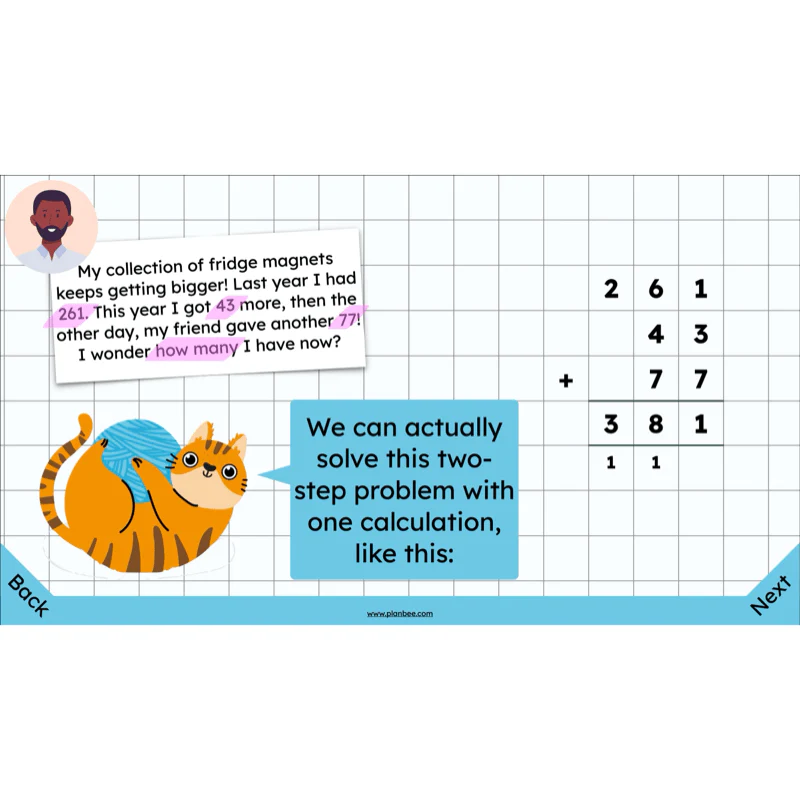
The included slides explain in simple terms how to use the formal method and show children how to present their work clearly and neatly.
None of the calculations in this lesson require exchanging between ones and tens or between tens and hundreds; allowing children to focus on the fundamentals of this method (exchanging is addressed in lesson 4).
What's included:
- Lesson plan
- Slides
- Activity ideas
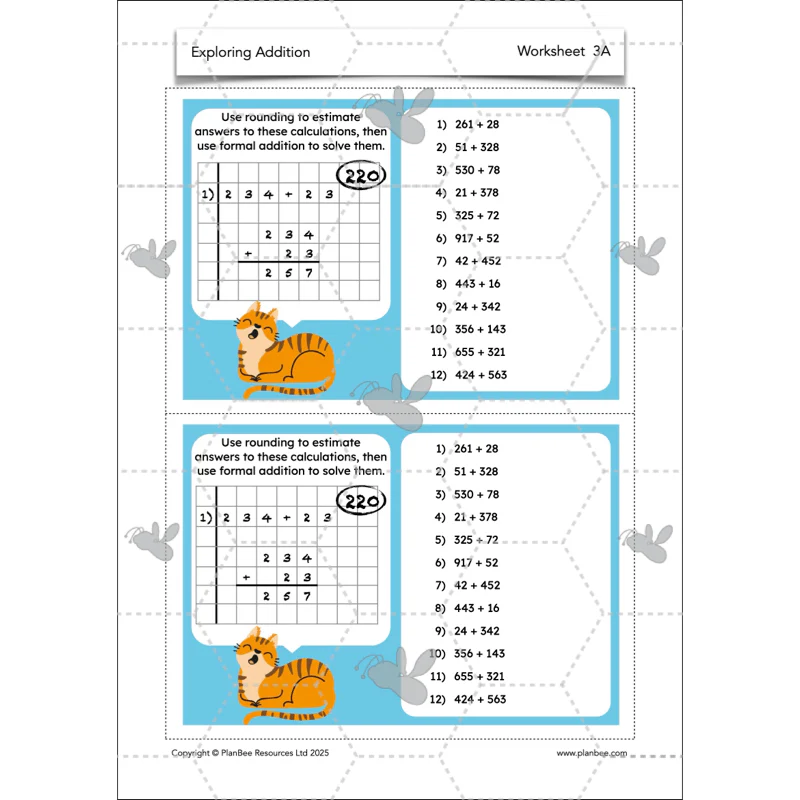
- Differentiated worksheets
- Calculation
- Squared paper
Exchanging
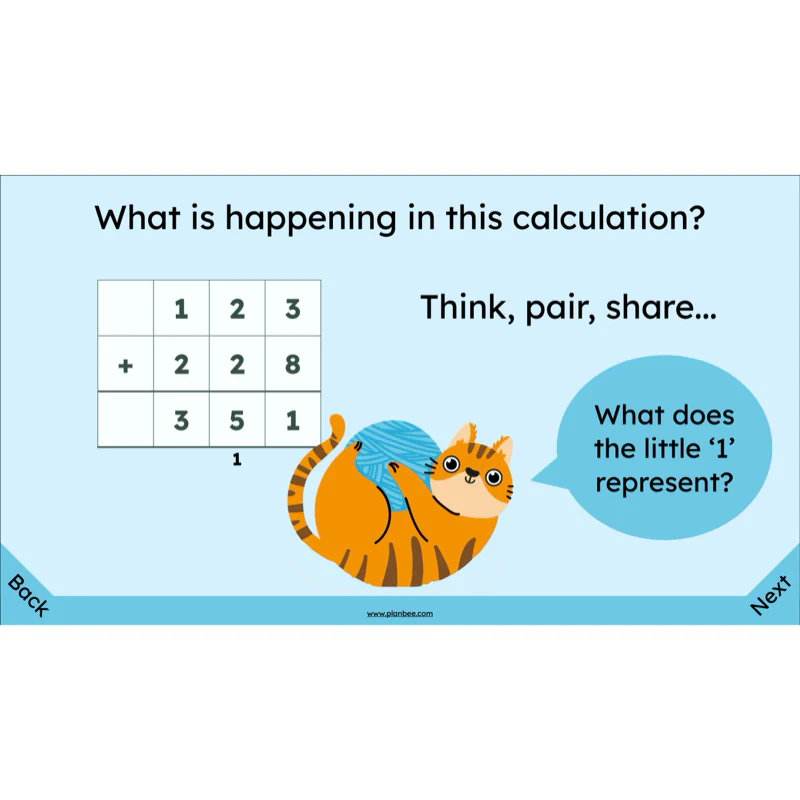
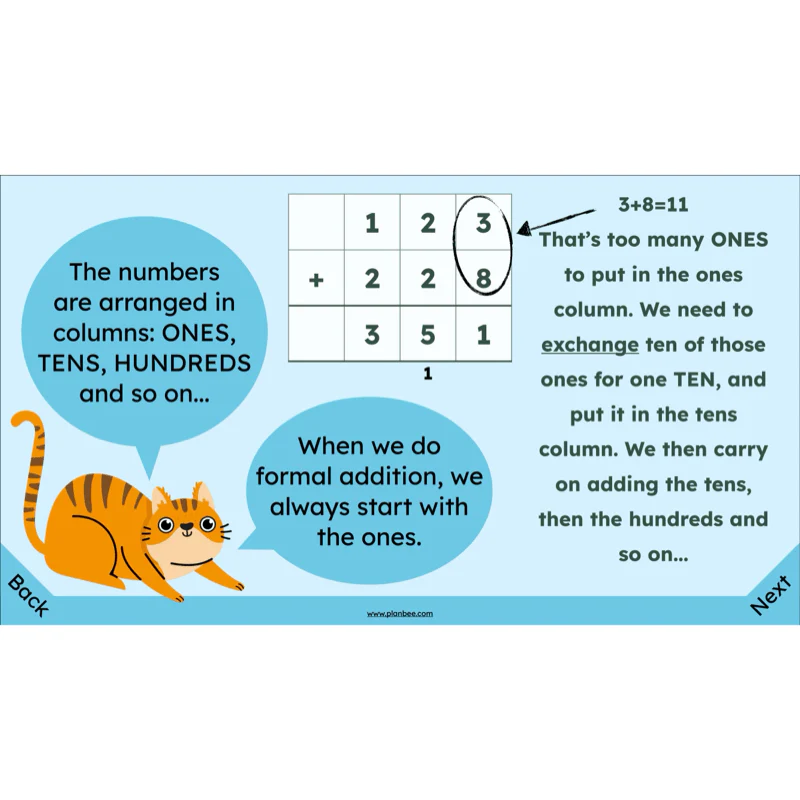
Build on children's knowledge of the formal addition method by looking more closely at calculations where exchanging of ones and tens and/or tens and hundreds is required.
The slides included with this lesson show children how to do this, and how to present their work logically and clearly.
Following this, children may either do more practise solving these kinds of calculations, or make posters to show how to solve formal addition calculations where exchanging is required.
What's included:
- Lesson plan
- Slides
- Activity ideas
- Differentiated worksheets
- Squared paper
Addition Problems
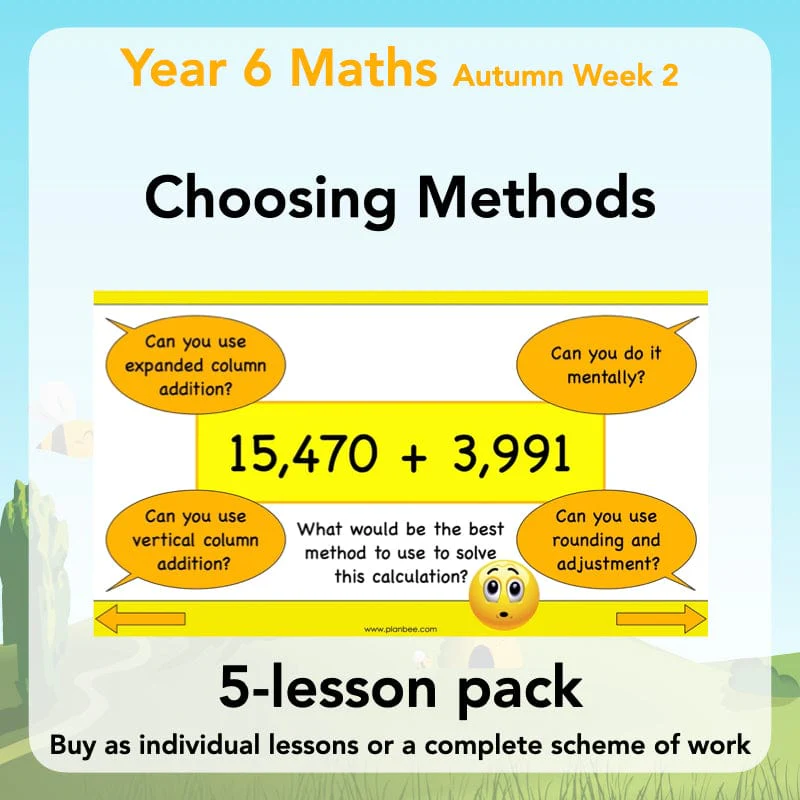
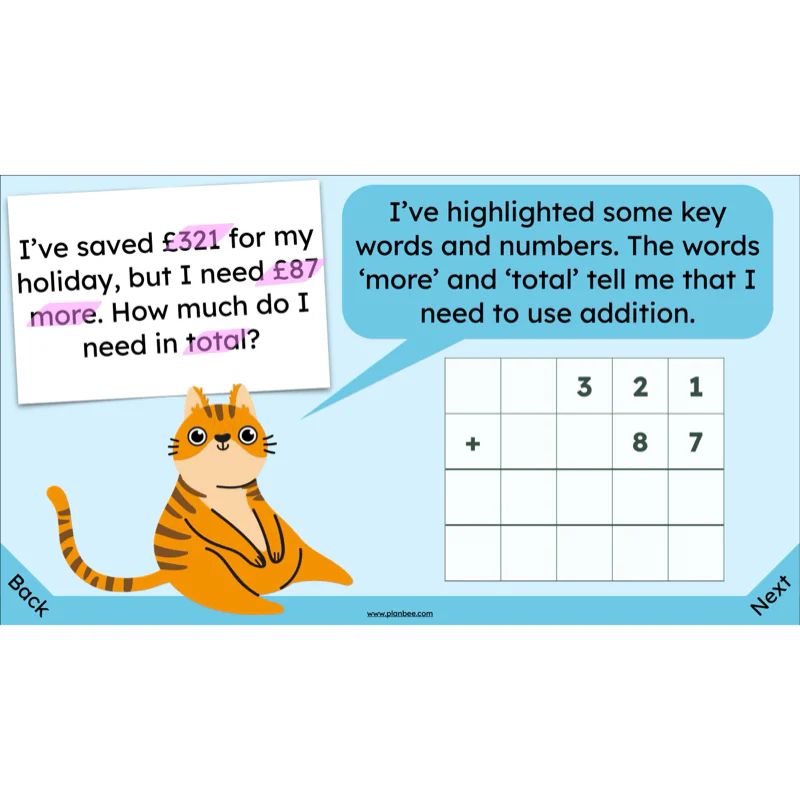
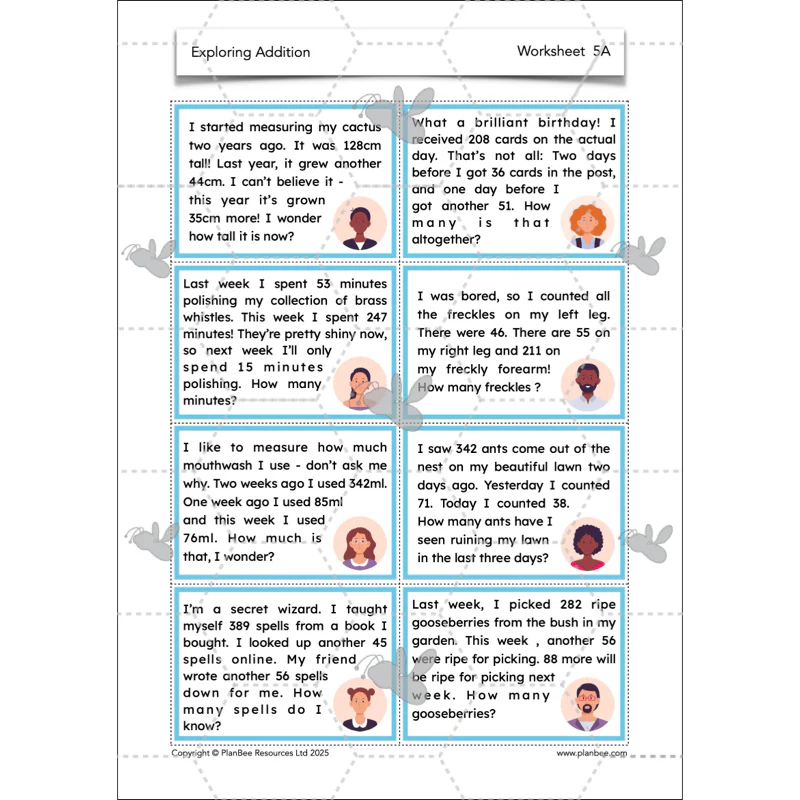
Remind children of some strategies to help when solving word problems, then challenge them to use a range of addition methods (including formal addition) to solve one- and two-step word problems, or work together to solve a number of visual calculation problems on the included activity cards!
What's included:
- Lesson plan
- Slides
- Activity ideas
- Worksheets
- Challenge cards
- Squared paper
Original: $4.62
-70%$4.62
$1.39

























Description
Get your children to hone their addition skills by using partitioning, estimating and formal written methods to solve a range of addition calculations, word problems and puzzles! Exploring Addition explains in simple terms how to estimate (and why it is useful) as well as how to use formal methods and present their work clearly and logically.
With lesson plans, slides, fun activity ideas, differentiated worksheets and much more, this Year 4 'Exploring Addition' series of lessons provides all you need to turn your class into addition wizards!
Partitioning
This lesson focuses on using estimating to help when checking answers to calculations, and builds on children's prior knowledge of using partitioning to add together two or more two- and three-digit numbers.
The included slides clearly show how children can present their work clearly and neatly, and there are plenty of opportunities for children to practise estimating and partitioning before they attempt either of the two included activities.
What's included:
- Lesson plan
- Slides
- Activity ideas
- Challenge cards
- Tiddlywinks Sheets
- Squared paper
Partition Big Numbers
Build on both children's prior knowledge and on the previous lesson's learning by using partition to add increasingly large numbers.
With the included slides, or during either of the two activities this lesson provides many opportunities to check for understanding and address misconceptions as children use a range of resources to represent the partitioning they are doing.
What's included:
- Lesson plan
- Slides
- Activity ideas
- Monster money
- Challenge cards
- Squared paper
Formal Addition
Start by challenging children to compare and describe similarities and differences between using partitioning to solve addition calculations and using the formal written method.
The included slides explain in simple terms how to use the formal method and show children how to present their work clearly and neatly.
None of the calculations in this lesson require exchanging between ones and tens or between tens and hundreds; allowing children to focus on the fundamentals of this method (exchanging is addressed in lesson 4).
What's included:
- Lesson plan
- Slides
- Activity ideas
- Differentiated worksheets
- Calculation
- Squared paper
Exchanging
Build on children's knowledge of the formal addition method by looking more closely at calculations where exchanging of ones and tens and/or tens and hundreds is required.
The slides included with this lesson show children how to do this, and how to present their work logically and clearly.
Following this, children may either do more practise solving these kinds of calculations, or make posters to show how to solve formal addition calculations where exchanging is required.
What's included:
- Lesson plan
- Slides
- Activity ideas
- Differentiated worksheets
- Squared paper
Addition Problems
Remind children of some strategies to help when solving word problems, then challenge them to use a range of addition methods (including formal addition) to solve one- and two-step word problems, or work together to solve a number of visual calculation problems on the included activity cards!
What's included:
- Lesson plan
- Slides
- Activity ideas
- Worksheets
- Challenge cards
- Squared paper